Ice Fishing Shelter Setup – Staying Warm on Early Ice: Safety, Insulation, and Comfort
Learn how to set up your ice fishing shelter for early ice season with tips on safety, insulation, heaters, and must-have gear. Find what you need at Fleet Farm.
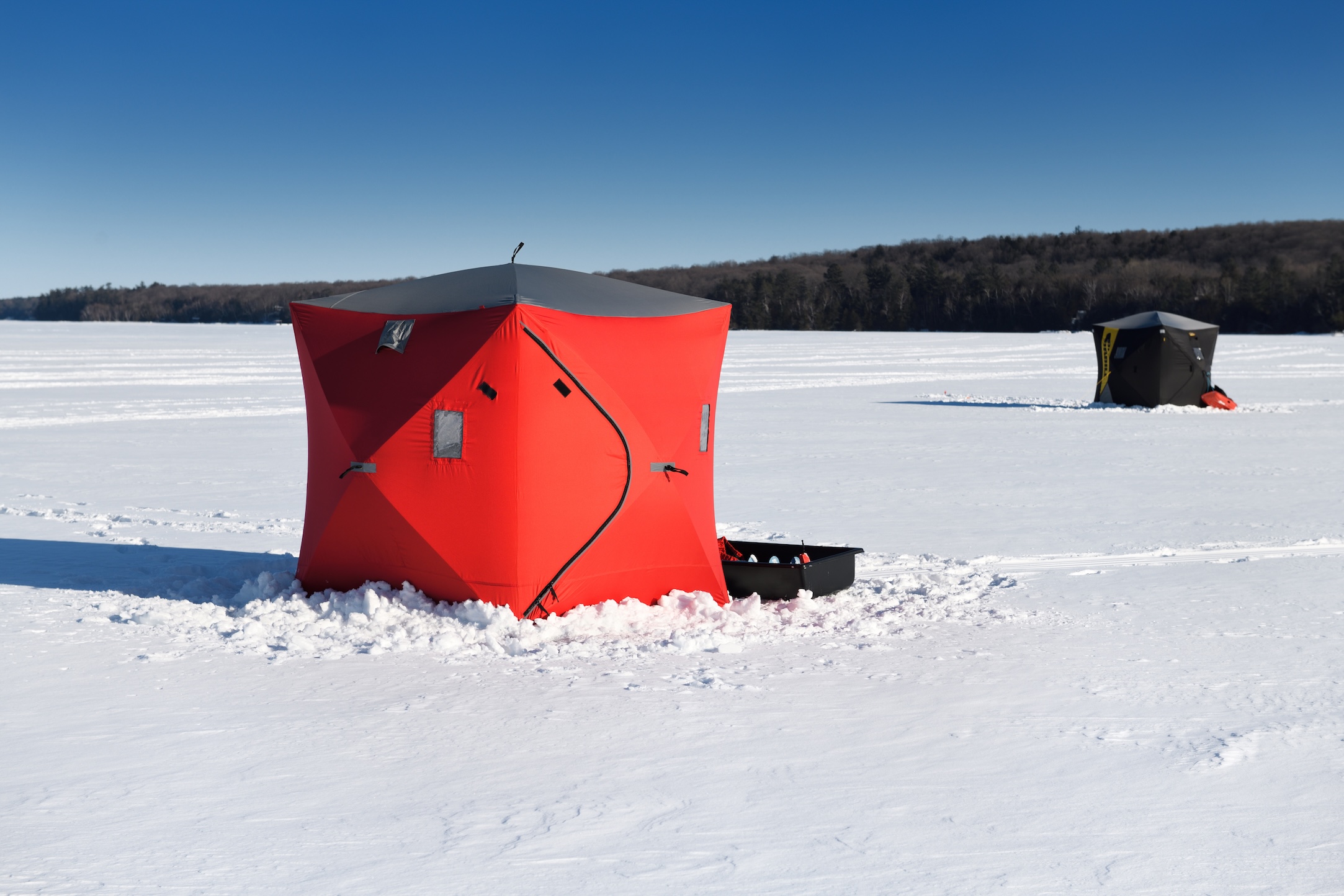
A good ice fishing setup begins with knowing what early ice entails: thin ice, biting wind, and cold that cuts right through. This time of year can be productive on the water. As temperatures fall and lakes freeze, fish become active again after a slow late-Autumn stretch.
During early ice, fish are often found in shallow spots near rocks, and the best bites typically happen mid-morning through late afternoon. To keep warm and safe, we’ll cover how to set up your shelter the correct way, with assistance from Fleet Farm every step of the way.
Safety First: Assessing Early-Ice Conditions
Before setting up your shelter or dropping a line, it’s crucial to check the ice. Early-season conditions change quickly, and no fish is worth the risk. Below, we’ll cover how to know if the ice is safe and the emergency gear you should always bring along.
The Ice Thickness Checklist: When is it Safe?
Even during a cold snap, ice thickness varies across a lake. Check every few steps with a spud bar or ice chisel, particularly near inlets, outlets, and structures. Never assume the ice is the same everywhere.
Make sure to use these recommended minimum ice thickness guidelines:
- 4 inches: Safe for walking, ice fishing, and skating
- 5-7 inches: Safe for snowmobiles and ATVs
- 8-12 inches: Safe for cars and small pickups
- 12-15 inches: Safe for medium trucks
Always look for clear, blue ice, which is stronger than cloudy or slushy ice. Carry a tape measure and check depth as you go. Also, avoid areas with cracks, flowing water, or snow cover that might insulate and weaken the ice below. In fact, local bait and DNR (Department of Natural Resources) sites often post up-to-date ice reports, so check before heading out.
Emergency Gear: Never Leave Shore Without It
If the worst happens, being prepared can save your life. The proper gear should always be part of your ice fishing setup.
Start with a pair of ice picks and keep them around your neck, where they’re easily accessible. These give you a grip if you fall through. You can also wear a personal flotation device or a flotation-asset ice suit for added safety. Many ice suits look and feel like regular outerwear, but actually add buoyancy in case of an emergency.
Other must-haves:
- 50-foot rope (keep it coiled in a bucket or sled)
- Whistle to signal for help
- Throw bag with floating rope
Fleet Farm offers a complete line of ice fishing clothing designed for both warmth and safety. Pack these essentials every time, no exceptions.
Choosing the Correct Shelter for Early Ice
Early in the season, staying warm and mobile is key. Ice fishing shelters come in various sizes and styles, and selecting the correct one allows you to fish longer and stay more comfortable. Below, we’ll cover insulation and layout, two crucial factors when ice is thin and temperatures are low.
<div class="rt-cta"><a class="cta-link-button inline-link" href="https://www.fleetfarm.com/category/fishing/ice-fishing/shelters-sleds/_/N-808854042?srsltid=AfmBOor17IWsbxaKZcgFR5d3gWnANxKTxhP7vnou-ray7z_hs8pG7DqK">Shop shelters and sleds at Fleet Farm</a></div>
Why Thermal Insulation is Non-Negotiable
When temps drop, the best ice fishing shelter is a fully insulated one. Thermal shelters use thick, multi-layered fabric, typically ranging from 600 to 900 denier, to retain heat and block wind. Many also have a black interior, which absorbs sunlight and naturally warms things up.
Premium shelters actually feature 90 grams of insulation per square meter, and triple-layer fabrics help reduce frost and condensation.
Another bonus? A well-insulated shelter uses less fuel to keep warm, saving you time and propane in the long run.
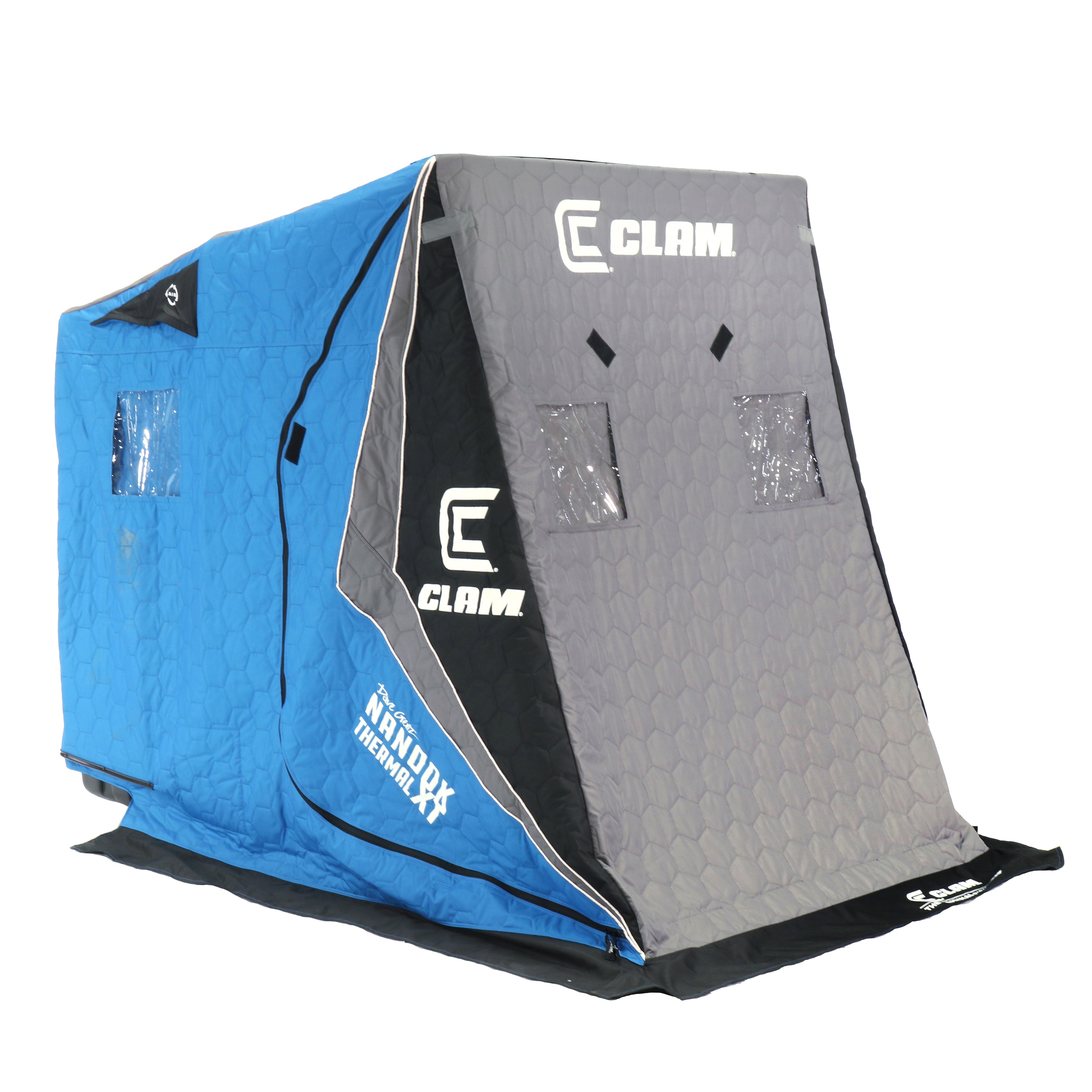
Product Spotlight: Clam Nanook XT Thermal Ice Shelter - 2 Angler
Flip-Style vs. Pop-Up Shelters: Mobility and Setup Speed
Your fishing style will guide which shelter works best. If you like to be on the move, a flip-over might be ideal. However, if you’re planning to set up camp for a few hours, a pop-up is a great choice. Both styles are available in insulated versions for added cold-weather comfort.
Here’s a quick comparison:
Flip-Style Shelter
- Setup Time: Fast, just flip and fish
- Portability: Heavy (Includes sled)
- Best Use: Running and gunning
- Storage Space: Limited
- Insulated Versions: Available
Pop-Up Fishing Shelter
- Setup Time: Moderate, takes a few minutes
- Portability: Lightweight and compact
- Best Use: Staying in one spot longer
- Storage Space: More room for gear and friends
- Insulated Versions: Available
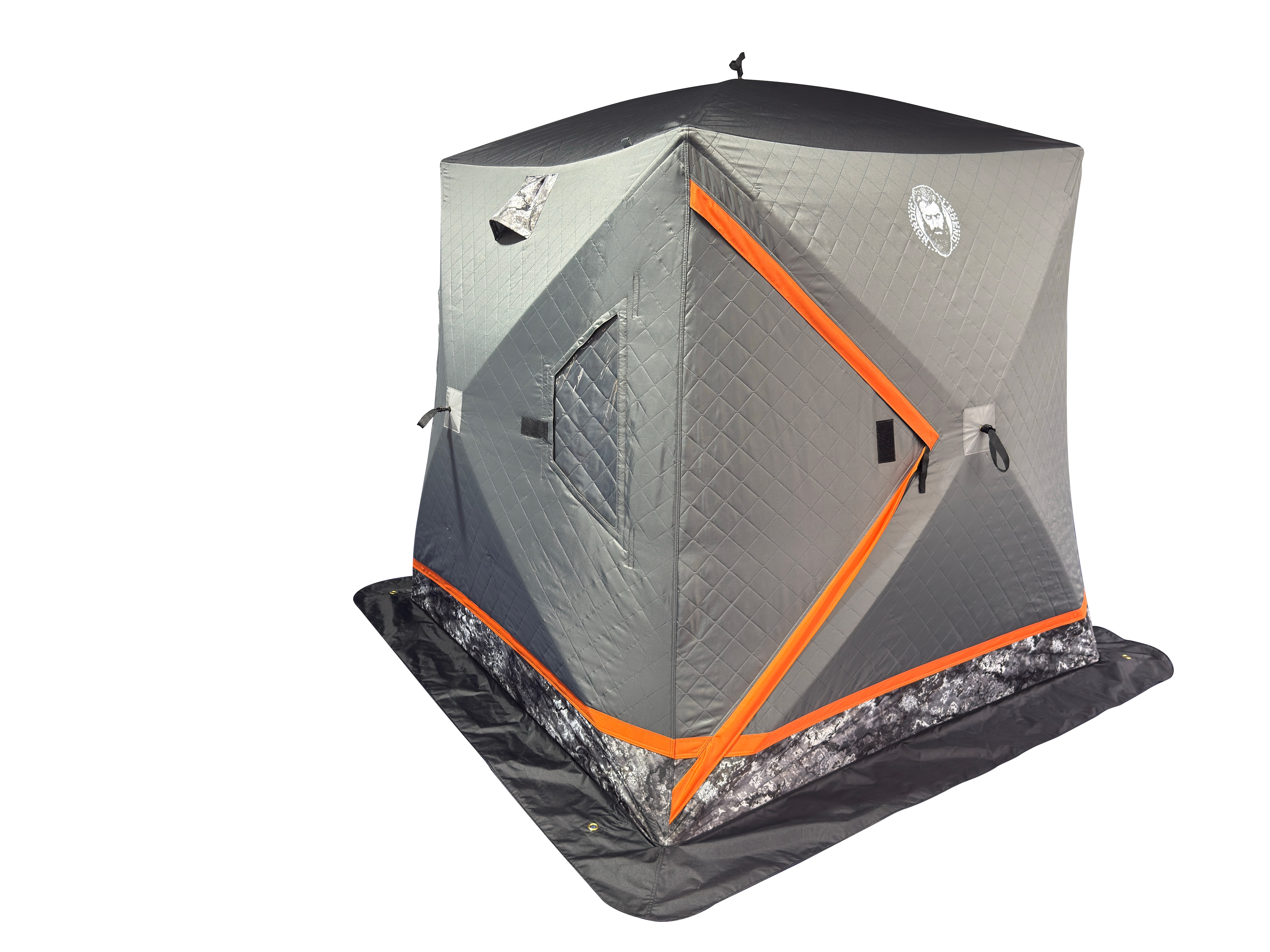
Product Spotlight: Nordic Legend 3-Person Ice Fishing Ice House - Camo
Anchoring Your Ice Shelter Securely
Even the best shelter won’t do much good if it slides across the ice. Anchoring properly keeps your setup stable in the wind and seals out the cold air. Below are tips on where to place your shelter and how to secure it tightly for the day.
Placement Pointers: Blocking the Wind and Sun
Begin by setting up into the wind, as this keeps gusts from catching the door or pulling at the walls. Use the shoreline, snowbanks, or trees to your advantage when they’re available. Natural windbreaks make a noticeable difference.
Think about the sun’s position, too. Facing the shelter to catch morning or afternoon sunlight provides some added warmth without requiring more fuel. Just a little solar gain can keep the inside temperature more comfortable on sunny days.
Also, set up away from high-traffic areas to avoid slush and shifting ice. A few extra minutes finding a sheltered spot can pay off once you settle in.
The Best Anchors for Early-Ice Conditions
Early ice often means a harder surface, so you’ll want the proper tools for a strong setup. Use ice anchor screws with long, wide threads. They grip better and are less likely to pull out in the wind. A drill adapter allows you to drive them in quickly without experiencing hand strain.
Attach the anchors directly to your shelter’s corner straps or hub loops. This gives a solid hold at the main pressure points.
Once the shelter is secured, pile snow or ice shavings around the base skirt to block drafts and keep it sealed to the ice.
The Power of Insulation and Skirting
Once your shelter is anchored, sealing out the cold becomes the next priority. Skirting and insulation work together to trap heat inside and keep wind out. Below, we’ll explain how to get the most out of both.
Sealing the Deal: Blocking Drafts and Ice Skirting
Most ice fishing shelters come with a fabric skirt, a flap that extends around the bottom. It’s designed to block wind, but it only works if it’s fully extended and sealed.
After anchoring, use a shovel or boot to pack snow or ice shavings along the skirt’s edge. This creates a barrier that blocks drafts and keeps your heat inside. On windy days, even a small gap can chill the entire shelter.
Are ice fishing huts warm? Yes, especially when they’re insulated and sealed properly. Thermal shelters with skirting and a portable heater can remain surprisingly warm, even in temperatures below zero.
Protecting Your Investment: Travel Covers and Maintenance
Travel covers aren’t only for the road. They also protect your shelter’s fabric, windows, and sled from snow, salt, and sun. Use them during transport, even for short drives.
After each trip, make sure your shelter is completely dry before storing it. Damp fabric can grow mold or attract mice over time. Ensure that everything is allowed to air out, wipe off any moisture, and inspect for tears or damaged parts.
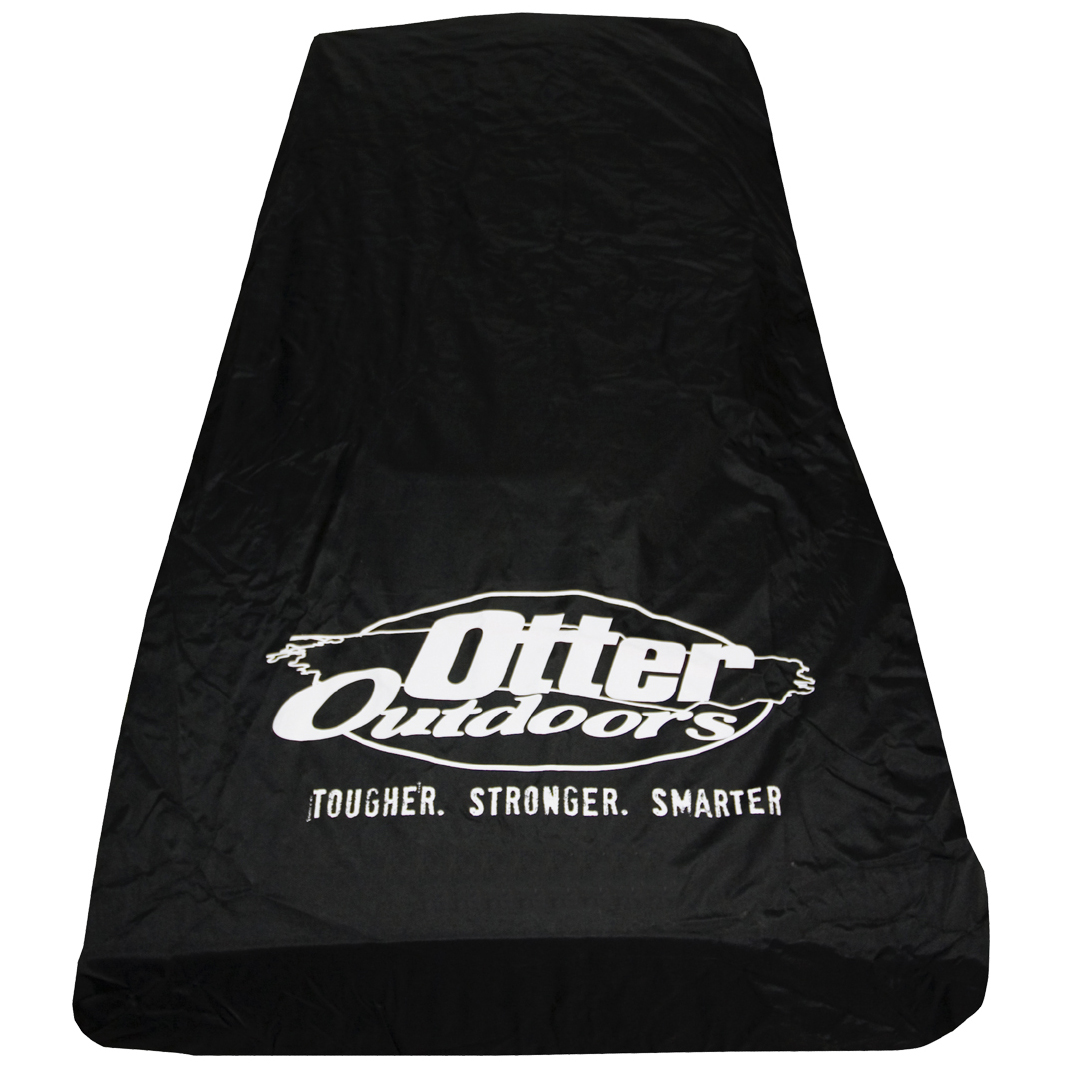
Product Spotlight: Otter Fish House Travel Cover - Lodge
Ice Camping on Early Ice: What to Know Before You Stay Overnight
Ice camping is a unique way to extend your time on the water. However, it comes with added prep, especially on early ice. First, always confirm that ice thickness is at least 8-12 inches before staying overnight, particularly with added gear weight. Use a fully insulated shelter with secure anchoring and a vented propane heater rated for long runtime.
Also, bring extra fuel, a carbon monoxide detector, and proper bedding to keep warm. Floor insulation, like foam tiles or heavy mats, blocks out cold from the ice below as well.
Overnight fishing adds adventure, but it’s vital to plan ahead and pack like you’ll be out longer than expected.
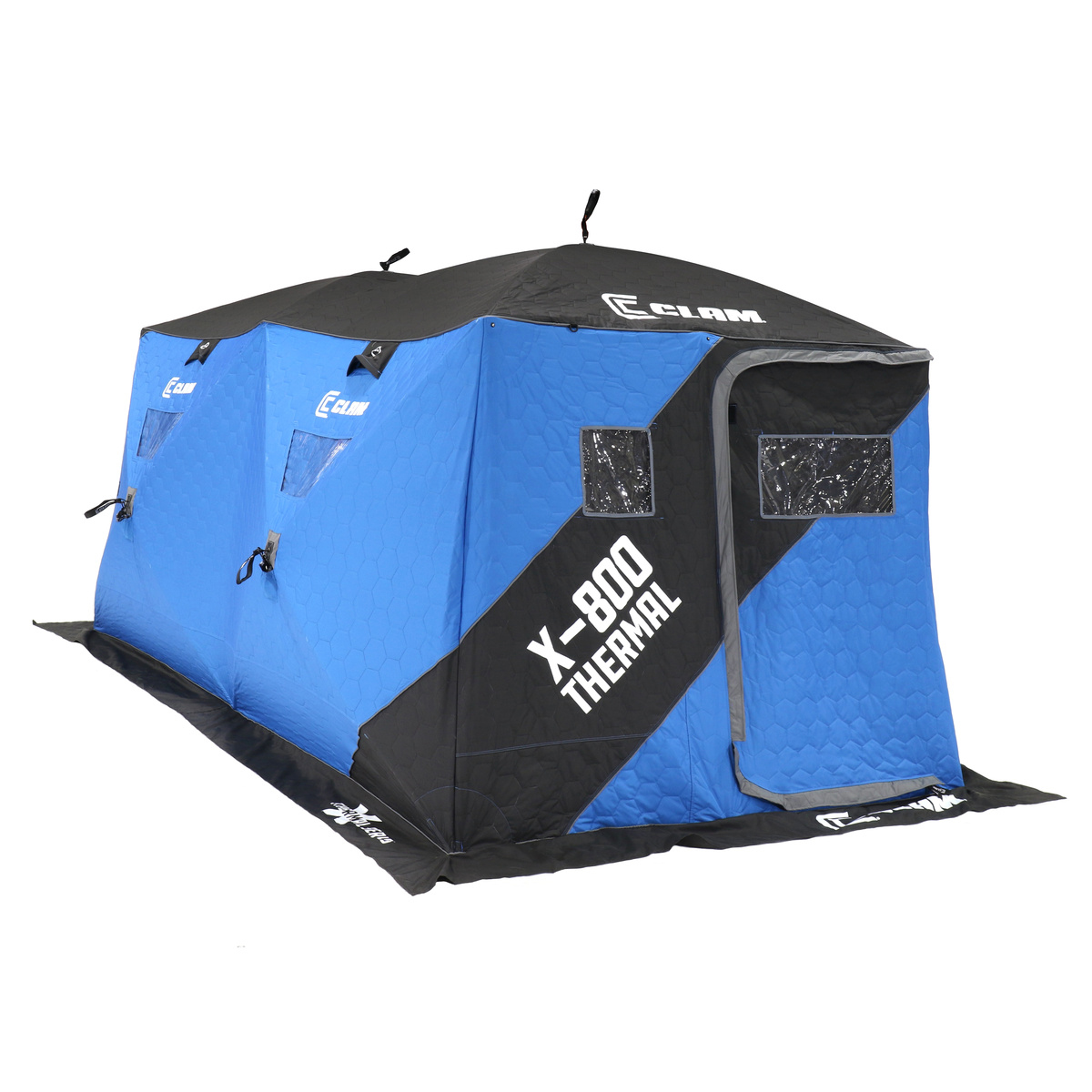
Product Spotlight: Clam X-800 Thermal - 6 Side Double Hub Shelter
Heating Your Portable Ice Palace:
Once your shelter’s sealed up, it’s time to bring the heat. Picking the proper heater and using it safely will keep your setup warm without putting you at risk. Here’s how to choose and use your heat source correctly.
Select the Proper Heater: Propane vs. Catalytic
Both propane and catalytic heaters are popular picks for ice fishing shelters. The best choice depends on your space, insulation, and fuel preferences. Use the chart below to compare the two:
Propane Heater
- Heat Type: Direct, forced air
- Best For: Quick warm-ups, large or insulated shelters
- Fuel Efficiency: Uses more propane
- CO Emissions: Higher, requires extra ventilation
- Noise Level: Louder (Some have fans)
- Typical BTU Range: 5,000 - 18,000+
Catalytic Heater
- Heat Type: Radiant Heat
- Best For: Long sessions, small insulated shelters
- Fuel Efficiency: Uses less fuel over time
- CO Emissions: Lower, still requires ventilation
- Noise Level: Silent operation
- Typical BTU Range: 1,500 - 8,000
Regardless of the heater, match the BTU (British Thermal Unit) rating to the size and insulation of your heater. A compact thermal shelter may only require 3,000-5,000 BTUs, while larger setups will need more.
Critical Safety: Ventilation and Carbon Monoxide
Regardless of the heater you use, you always need ventilation.
Leave at least two vents open: one low (about a foot off the ground) and one high. These allow fresh air in and let carbon monoxide (CO) out. Never block them with snow or gear.
A 2024 study actually found that 80% of anglers had measurable CO in their blood after just one hour inside a propane-heated shelter. CO is odorless and invisible, making it extremely dangerous.
Always use a battery-powered Carbon monoxide detector, and replace it every five years. It’s a small step that keeps you safe.
Maximizing Comfort: Gear and Organization
A warm shelter is a good start, but a few minor upgrades can make your time on the ice even better. From warm feet to organized gear, these comfort tips let you stay focused on the fish rather than the cold.
How to Keep Feet Warm While Ice Fishing
Cold feet can ruin a good day. Start with a moisture-wicking base layer (skip cotton) and wear wool or synthetic socks. Layering two thin pairs is often warmer than one thick pair.
Wear insulated, waterproof boots that are roomy enough to avoid cutting off circulation. Finally, keep your feet off the ice. Use a foam pad or an old carpet square to stay warm and dry.
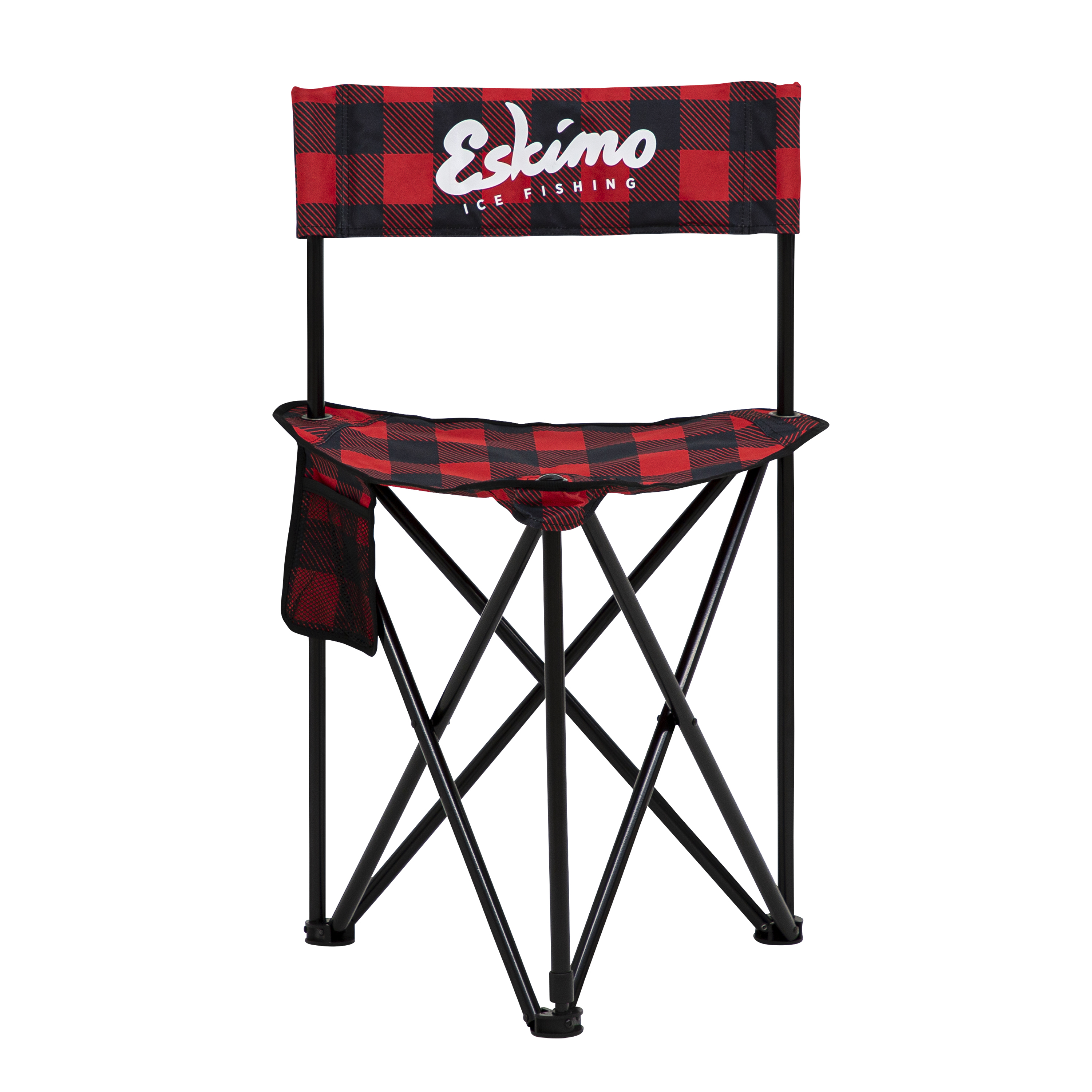
Product Spotlight: Eskimo XL Plaid Folding Ice Chair
The Ultimate Ice Fishing Command Center: Electronics and Accessories
Today’s shelters do more than just block wind; they help you fish better. Modern tools such as flashers, GPS units, and underwater cameras take the guesswork out of finding fish and tracking depth.
Inside the shelter, keep gear organized with:
- Rod holders
- LED lighting
- Overhead mesh storage for gloves, snacks, or extra layers
You can find the latest gear in Fleet Farm’s Ice Fishing Electronics Section.
Must-Have Ice Fishing Accessories from Fleet Farm
Once your shelter is set, it’s the small add-ons that complete your ice fishing setup. A reliable auger is essential for drilling clean holes quickly, and you can use either manual or power options.
They both get the job done. Add LED lights for early mornings or late afternoons, plus a compact cookstove or portable grill to keep meals warm. These little upgrades can make a sizable impact on how much you enjoy your time on the ice.
Make sure to stock up on all the extras at Fleet Farm’s Ice Fishing Accessories and Tackle and Ice Line sections.
Ice Fishing Tips for Beginners: Maximizing Your Time
When you’re just getting started, a few simple ice fishing tips can make the experience easier and more enjoyable. Before setting up, pre-drill your holes so you’re not fumbling with gear while trying to keep warm. Keep the tackle organized in labeled trays or pouches, and keep your most frequently used items within reach.
Dress in thin, breathable layers so you can adjust to the changing temperatures inside and outside the shelter. A portable shelter is particularly beneficial for early ice, letting you stay mobile and follow the bite. The more prepared you are, the more time you’ll spend fishing.
Ready to go Ice Fishing?
Before you head out, double-check your gear list. Early ice brings opportunity and also responsibility. Here’s a quick rundown to make sure your ice fishing setup is ready:
- Ice fishing shelter (Insulated, anchored)
- Heater + Carbon monoxide detector
- Ice picks, rope, flotation suit
- Auger, scoop, tackle
- Warm boots, layered clothing
- Electronics + accessories
- Travel cover
<div class="rt-cta"><a class="cta-link-button inline-link" href="https://www.fleetfarm.com/">Find everything you need at your local Fleet Farm or online</a></div>